Tips for starting with Saga
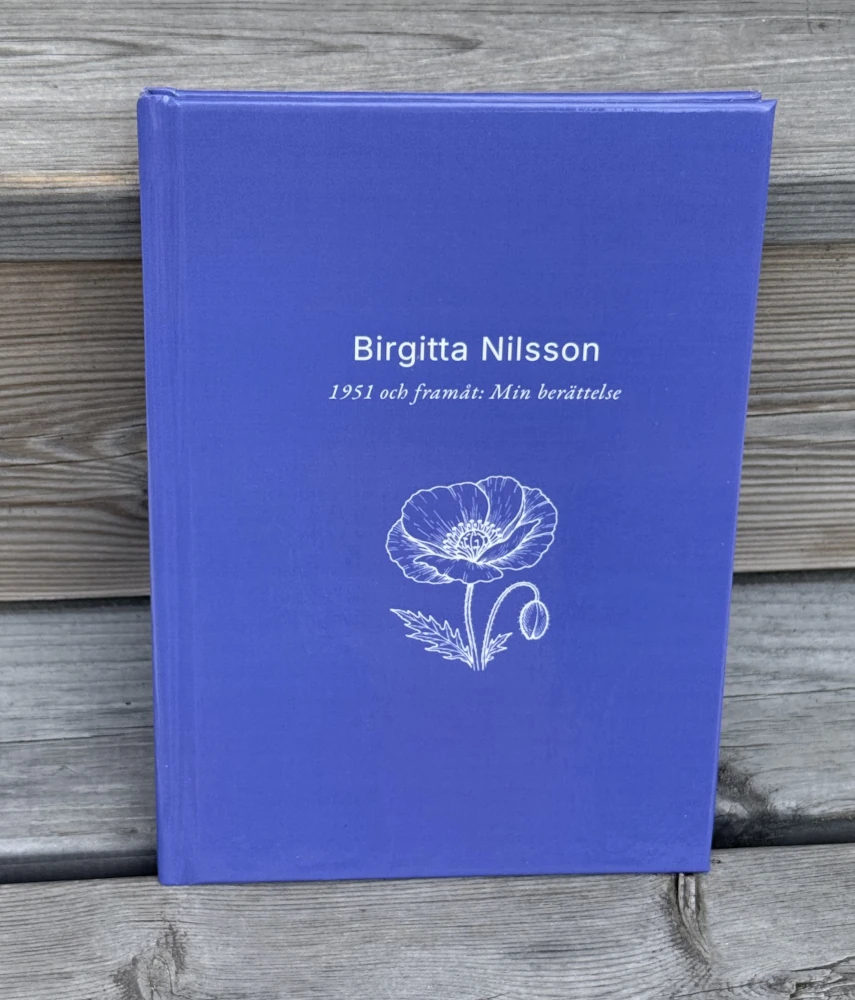
Starting to tell your life story can feel big. Where do you even begin? Here are a few thoughts and tips from Birgitta, one of our users who just created her own memoir with Saga.
Use the tips that sound good to you. You don't have to do everything, and there's no right or wrong way to tell the story of your life.
- 1
Think about why you want to tell it
Who are you telling it for? It doesn't have to be grand, but a sense of who will read it makes it easier to begin.
- 2
It can be nicer to do it together with someone
A friend or family member sitting beside you often makes it more enjoyable, and the memories come more easily when there are two of you.
- 3
Dig out old photos before you start
They bring back memories you didn't know you had.
- 4
Read the introduction to each section
At the start of each module there's a short text describing the area. Read it and let your thoughts wander a little before you start talking.
- 5
Don't let the questions limit you
If you want to talk about something else, do. Saga asks follow-up questions about whatever you bring up.
- 6
The more you tell, the more Saga has to write about
You can always remove things later, so there's no harm in talking freely.
- 7
You can pause and build on your answer in stages
It takes a few questions to find the rhythm, but it's nice to be able to add a thought instead of talking at length all at once.

Click "Tell more" to add more to your answer, in several rounds if you like. - 8
Correct the spelling of people and places during the interview
The transcription can be edited on the spot, so names are right from the start.
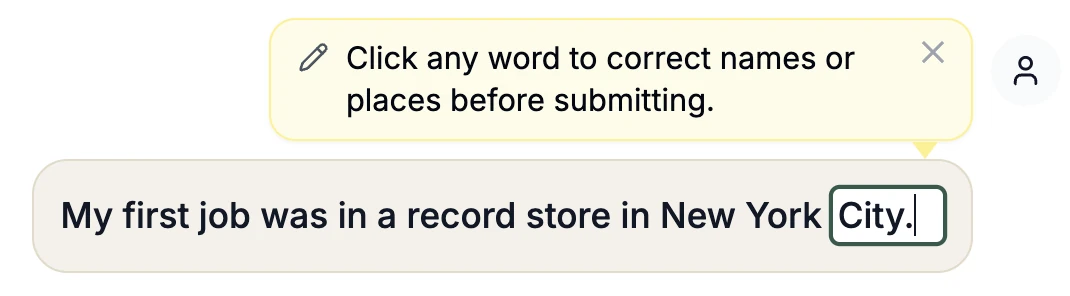
Click a word to fix names or places before you send. - 9
A chapter can be about something entirely different from its title
Maybe "Family" becomes a story about a year abroad instead. That's fine. You can rename the chapter afterwards so it's called what the conversation was actually about, for example "My adventures in China."
- 10
Look at the story right after each interview
It's fun to see the result straight away, and it motivates you to keep going.
The most important thing is to just begin. The first section is often the hardest, then the memories come on their own. And remember, nothing has to be perfect right away. You can always go back, add, and change.
Good luck with your storytelling.